Solar
Off-Grid Solar Kits: The Components, How They Connect, and What to Buy
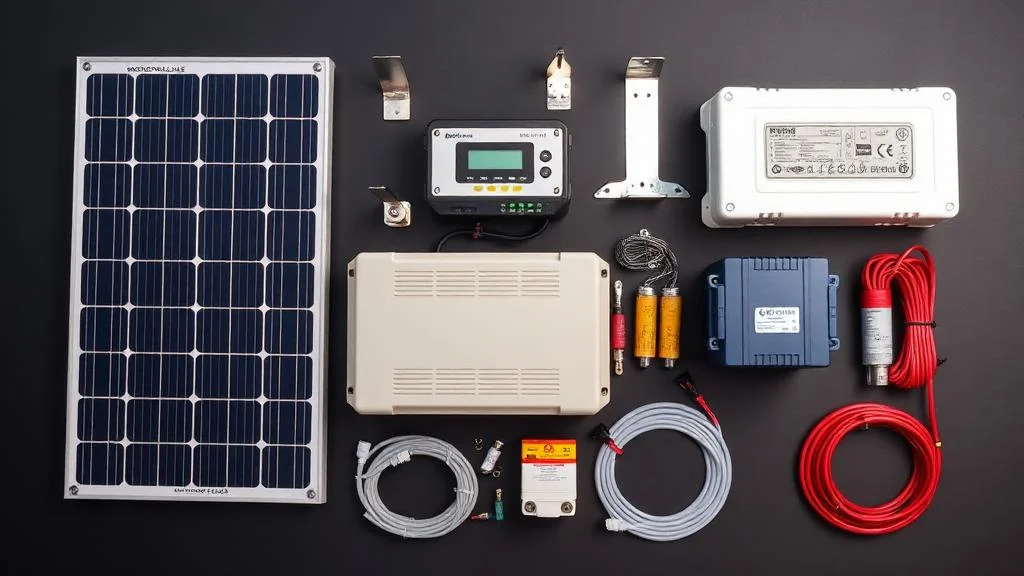
An off-grid solar kit is not a product, it is a small power plant in four parts: panels make DC power, a charge controller feeds it safely to batteries, batteries store it, and an inverter turns it into household AC. Complete kits (Renogy is the household name; Shop Solar Kits curates the big whole-home systems) bundle matched parts, which removes the classic beginner failure of buying four good components that do not work together.
ReadyStockpile covers panels, kits, and components, the system you build. If what you want is a single box with a battery already inside it, that is a power station, and our sister site BackupPowerGuides covers those in depth, linked below.
Quick facts
- The four parts
- Panels, MPPT charge controller, battery bank, inverter
- Renogy affiliate terms (transparency)
- Average 6% commission, no maximum, per Renogy's own affiliate page
- Complete kit sizes
- From 100W cabin kits to 10kW+ whole-home systems
- Complete kit price range
- Roughly $300 entry kits to $5,000+ large kits; whole-home systems $10,000+
- Battery chemistry shift
- LiFePO4 (lithium iron phosphate) is now the default recommendation: longer life, usable depth of discharge
Each component's job, in one paragraph each
Panels are rated in watts under laboratory sun; real output runs 60-80% of the label on a clear day, less in winter and shade. The charge controller's job is protection and efficiency: MPPT controllers harvest meaningfully more energy than cheap PWM units, especially in cold weather and with higher-voltage panel strings, and they keep the battery from being cooked by raw panel voltage.
Batteries are where systems succeed or disappoint. A LiFePO4 bank can be discharged 80-90% daily for thousands of cycles; an old lead-acid bank should only use about half its label capacity and lasts a few years. The inverter converts DC to AC; size it for your largest simultaneous load, buy pure sine wave for anything with a motor or electronics, and remember it draws power just idling.
Kit or components?
Kits win for first systems: matched voltages, the right cables and fuses in the box, one manual, one support desk. Components win for expansions and odd requirements, and for squeezing price. The middle path most people land on: a kit for the core system, then component additions (extra panels are the universal upgrade) as loads grow.
Check any kit for the quiet corners where they save money: undersized cable, no battery monitor, a PWM controller in a big kit, or an inverter too small for the panels. A good kit lists every part by model so you can verify each one.
Where plug-in power stations fit (and do not)
Power stations combine battery, controller, and inverter in one carryable box; they are excellent appliances and a poor substitute for a scalable system. They belong to our sister site's territory. The dividing line we use: if it is meant to be built, mounted, and expanded, it is here; if it is meant to be carried to the outlet it replaces, it is on BackupPowerGuides.
Step-by-step: put it into practice
Tick each step off as you complete it. Your progress is saved on this device.
Where to buy: we link brands directly until our affiliate reviews are complete. Current plain links:
Sources
Facts checked against the sources above. Last verified: November 11, 2026. If a figure here ever conflicts with an official source, the official source wins, and we want to hear about it via the contact page.